That dingy seat cushion usually does not happen overnight. It is body oil, dust, pet hair, food residue, and the occasional mystery spill building up week after week until the couch starts looking older than it really is. If you are wondering how to clean couch cushions without damaging the fabric or locking in stains, the method matters just as much as the cleaning product.
A lot of homeowners make the same mistake – they either soak the cushion, scrub too aggressively, or use whatever cleaner is under the sink. That can leave water rings, fabric distortion, or a smell that lingers longer than the original problem. The good news is that many couch cushions can be cleaned successfully at home if you take the right steps and know where the limits are.
Before You Clean Couch Cushions, Check the Fabric Code
The first move is not grabbing a bottle. It is finding the upholstery cleaning tag, usually tucked under the cushions or attached beneath the sofa frame. That tag tells you what the fabric can safely handle.
A W code means water-based cleaners are generally safe. An S code means use solvent-based upholstery cleaner only. A WS code gives you more flexibility. An X code means no water or solvent – only vacuuming or professional cleaning. If that tag is missing, do not guess on delicate fabrics like velvet, linen blends, or natural fibers. Testing any product on a hidden area is still smart, even if the code looks straightforward.
This part sounds basic, but it is where a lot of damage starts. A cushion can survive the stain and still be ruined by the wrong cleaning method.
How to Clean Couch Cushions Step by Step
Start by removing the cushions if possible. Vacuum every side slowly using an upholstery attachment, paying extra attention to seams, piping, and creases where grit settles. Dry soil acts like sandpaper, and if you start scrubbing before removing it, you can grind debris deeper into the fabric.
If the cushion covers unzip and the care label allows machine washing, wash them on a gentle cycle with cold water and a mild detergent. Skip hot water and heavy spin settings. Those are common causes of shrinkage and twisted covers that never sit right again. Air drying is safer than a hot dryer, especially if the fit is already snug.
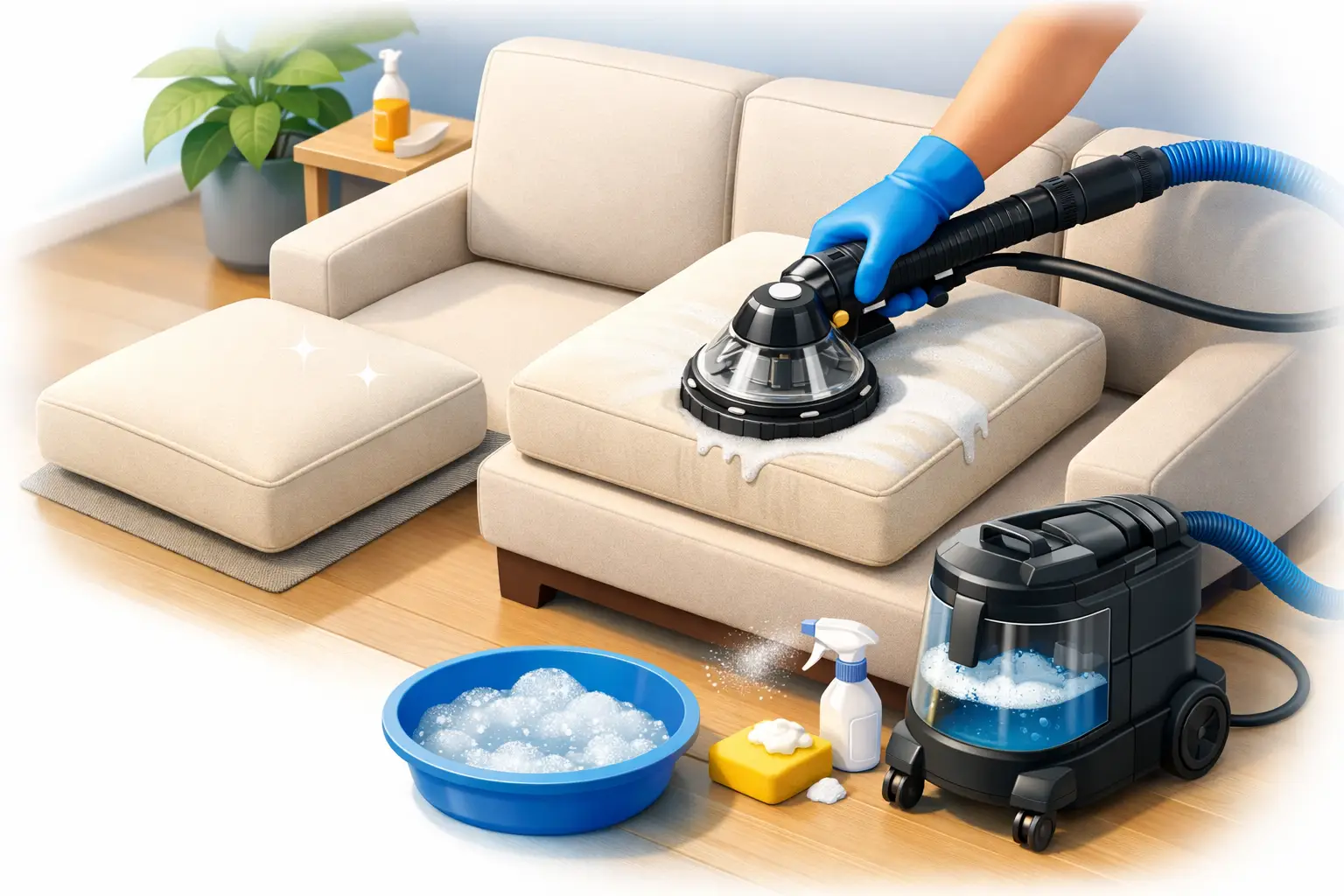
If the covers are not removable or not machine washable, spot cleaning is usually the safest DIY route. Mix a small amount of mild dish soap with warm water for W or WS fabrics. You want suds, not a bucket of soaking liquid. Dip a clean white cloth into the foam, not the water, and blot the surface gently. Work from the outside of the stain inward so you do not spread it.
Avoid saturating the cushion insert underneath. That is where problems multiply. Too much moisture can lead to slow drying, mildew odor, browning, or water marks, especially on light upholstery. After cleaning, blot with a dry towel, then let the cushion air dry completely with good ventilation.
Stain Removal Depends on What Caused It
Not every stain should be treated the same way. Food spills, body oils, pet accidents, and ink all behave differently, and the wrong approach can set them permanently.
For fresh spills, blot immediately. Do not rub. Rubbing pushes the spill deeper and roughs up the fabric fibers. If it is something oily, like lotion or greasy food, a mild upholstery-safe cleaner usually works better than plain water alone. For protein stains such as pet accidents, you need more than fragrance. Those often require an enzyme-based treatment to break down the source of the odor.
Water stains are another one people underestimate. You clean a small spot, it dries, and suddenly there is a ring larger than the original mark. That happens because dissolved soil migrates to the edge as the moisture evaporates. Sometimes the fix is cleaning the entire panel evenly, not just the visible spot.
Ink, dye transfer, and older mystery stains are where DIY results become unpredictable. You may lighten them, but full removal depends on the fiber type, prior cleaning attempts, and how long the stain has been there. That is one reason professional upholstery cleaning gets called in after a homeowner has already tried three products and made the spot worse.
Odors Need More Than Surface Cleaning
If the cushion smells musty, sour, or like pet odor, the issue is often below the surface fabric. The top may look clean enough, but the insert can still hold moisture, bacteria, or urine residue. Sprays and deodorizers may cover it temporarily, but they rarely solve it.
For mild odor, vacuuming thoroughly, lightly cleaning the upholstery surface, and drying it fully may be enough. Baking soda can help with surface odor if you sprinkle it on dry fabric, let it sit for a few hours, and vacuum it out. It is not a cure-all, though. Once odor has penetrated the foam, especially from pet accidents, surface treatment only goes so far.
That is where extraction matters. Professional equipment can rinse and pull contamination out instead of just spreading it around. On heavily used family couches, that difference is noticeable fast.
The Biggest Mistakes People Make
The most common mistake is over wetting. Upholstery fabric and cushion foam do not dry like a towel in the laundry room. Once moisture gets deep into the insert, drying can take much longer than expected.
The second mistake is aggressive scrubbing. People panic when a stain does not lift right away, so they scrub harder. That can fuzz delicate fabric, distort texture, or leave a clean-looking patch that stands out from the surrounding material.
The third mistake is using the wrong product. Carpet spotter, bleach-based cleaner, dish degreaser, and all-purpose spray are not interchangeable. Even if they do not bleach the color, they can leave residue behind that attracts more soil.
And finally, many people stop too early on drying. If a cushion feels cool or slightly damp, it is not done. Put it near moving air, rotate it, and give it enough time before putting it back into regular use.
When DIY Cleaning Is Enough – and When It Is Not
If your couch cushions have light soil, a recent spill, or general dullness, home cleaning may be enough to freshen them up. This is especially true when the fabric code is clear, the stain is minor, and you can control moisture properly.
If the cushions have dark armrest oils, pet urine, repeated spills, water staining, or heavy overall buildup, results become more limited. The couch may need deep extraction, controlled drying, and stain treatment based on the fiber and contamination type. That is also true for sectional sofas with large, connected seating areas where spot cleaning can leave uneven results.
There is a practical point where DIY stops being cost-effective. If you spend money on multiple cleaners, invest hours into trial and error, and still end up with odor or visible staining, professional cleaning is usually the better value.
How Professionals Clean Couch Cushions
A proper upholstery cleaning is not just spraying soap and wiping it off. First comes fabric identification and pre-inspection. Then dry soil removal, stain treatment, controlled agitation if needed, and extraction with the right level of moisture for the material. The goal is to remove soil and residue while protecting the fabric and speeding up dry time.
That matters a lot with delicate upholstery or heavily used couches. Owner-operated companies that specialize in restoration work tend to be more careful here because the person doing the job is also the one standing behind the result. At The One Carpet & Upholstery Cleaning, that hands-on approach is a big part of what gives customers confidence when a couch has tough staining, odor issues, or years of buildup.
Keeping Couch Cushions Cleaner Longer
Once the cushions are clean, maintenance gets easier if you stay ahead of the buildup. Vacuum them weekly if you have kids, pets, or a high-use living room. Rotate and flip cushions when the design allows it, so wear patterns stay more even.
Treat spills right away, but keep your response simple. Blot first, identify the stain, and avoid overusing product. If you use a cleaner, test it in a hidden spot and use less than you think you need.
It also helps to remember that soil is not always visible at first. Light-colored couches, textured fabrics, and family-room sectionals can hold a surprising amount of residue before they start to look dirty. By the time the cushions feel sticky, smell stale, or show dark head and arm areas, the buildup is usually deeper than a surface wipe can fix.
A couch gets used hard. It catches the everyday mess most people do not notice until the fabric starts looking tired. Clean carefully, dry thoroughly, and if the cushions still look or smell off, trust that it is not you being picky – it is usually a sign the fabric needs a deeper, more professional clean.