Extreme Stain Removal That Actually Works

Extreme Stain Removal That Actually Works

A red drink spill is one thing. A pet accident that sat for days, a black traffic lane in a hallway, or a mystery stain that keeps coming back after every DIY attempt – that is where extreme stain removal starts to separate real cleaning from guesswork.

Most people do not call for help because of a light spot. They call when the stain has set, spread, soaked through the backing, picked up odor, or already survived a few rounds of store-bought cleaner. At that point, the goal is not to make the carpet smell better for a day. The goal is to restore it as far as the material allows, without damaging the fibers in the process.

What extreme stain removal really means

Extreme stain removal is not one product or one quick pass with a machine. It is the process of identifying what caused the stain, how long it has been there, what fiber you are working on, and how deep the contamination goes. A fresh food spill on synthetic carpet behaves very differently from pet urine in a wool rug or filtration soiling along the edges of a room.

That is why the biggest mistake in stain removal is treating every stain the same way. Some stains need heat. Some need controlled dwell time. Some need acidic treatment, and others need alkaline treatment. Some should be flushed aggressively, while others can be permanently set by rubbing, over-wetting, or using the wrong over-the-counter spotter.

In real homes, the toughest jobs are usually not just “stains.” They are a combination of staining, residue buildup, embedded soil, and odor contamination. If you only address the surface color, the problem often returns.

Why DIY extreme stain removal often backfires

It is easy to understand the impulse. You see a stain, grab a towel, spray something on it, and hope for the best. Sometimes that works on a fresh, simple spill. On severe stains, it often creates a second problem.

Over-the-counter products can leave sticky residue that attracts more soil. Scrubbing can distort carpet fibers and make the spot look worse even after the stain is gone. Too much water can push contamination deeper into the pad or cushion. Some cleaners also bleach color or create a lighter patch that cannot be corrected with cleaning.

Pet stains are a common example. Many people blot the surface, spray deodorizer, and think the issue is handled. But if urine has reached the backing or pad, the odor source is still there. Warm or humid conditions can bring it right back. The same goes for upholstery. A couch cushion may look cleaner on top while contamination remains underneath the fabric.

The stains that need a professional approach

Pet urine and recurring odor

This is one of the most common calls for extreme stain removal, and for good reason. Urine does not just discolor fibers. It can create salts, odor, and bacterial contamination that stay active in the carpet structure. If it has dried repeatedly or soaked into the underlay, standard spot cleaning is rarely enough.

A proper approach may involve locating all affected areas, applying specialized treatment, flushing contamination out, and in severe cases discussing realistic limits if damage has already become permanent. Honesty matters here. Not every pet stain can be erased completely, but many can be improved far beyond what homeowners expect when the right process is used.

Heavy traffic lanes and black walk paths

These are often mistaken for simple wear. Sometimes they are wear, but a lot of the dark appearance comes from impacted oily soil. Hallways, stairs, and living room entrances collect residue from shoes, skin oils, and airborne grime over time. That buildup bonds to the fiber and resists basic cleaning.

This type of staining usually needs stronger pre-treatment, agitation, and a thorough hot water extraction process to break and rinse away the soil load. On some carpets, restoration is impressive. On others, permanent wear has to be separated from removable soil.

Filtration lines along edges and baseboards

Those dark lines around room edges are some of the hardest marks to remove. They happen when air carries fine soil through gaps along walls, under doors, and around vents. The particles get trapped in the carpet and create a gray or black outline.

Filtration staining can improve, but it is often stubborn because the particles are fine, greasy, and deeply embedded. This is where professional tools, patience, and experience matter. It is also where unrealistic promises should be avoided. A trustworthy cleaner will tell you whether you are looking at strong improvement or full correction.

Water stains, browning, and wick-back

Water itself can leave ugly marks, especially after spills, leaks, over-wetting, or previous cleaning done poorly. As moisture dries, it can pull soil and tannins to the surface. That is why a spot sometimes looks fine right after cleaning, then reappears the next day.

Extreme stain removal here means correcting the source of the issue, not just cleaning the visible mark again. That may involve controlled moisture, fiber-specific treatment, and proper extraction so residues do not keep surfacing.

What the right process looks like

A real stain removal job starts with inspection, not assumptions. Fiber type, stain age, stain source, backing condition, and previous cleaning attempts all matter. Synthetic carpet usually gives you more options than natural fibers. Upholstery can be even more sensitive depending on the weave, dyes, and cushion fill.

From there, the best results usually come from a layered process. First, dry soil and loose debris need to be removed so they do not turn into mud during cleaning. Then the stain or soiled area is pre-treated with the right chemistry for that specific problem. Agitation may be used to work the solution into the fibers without damaging them.

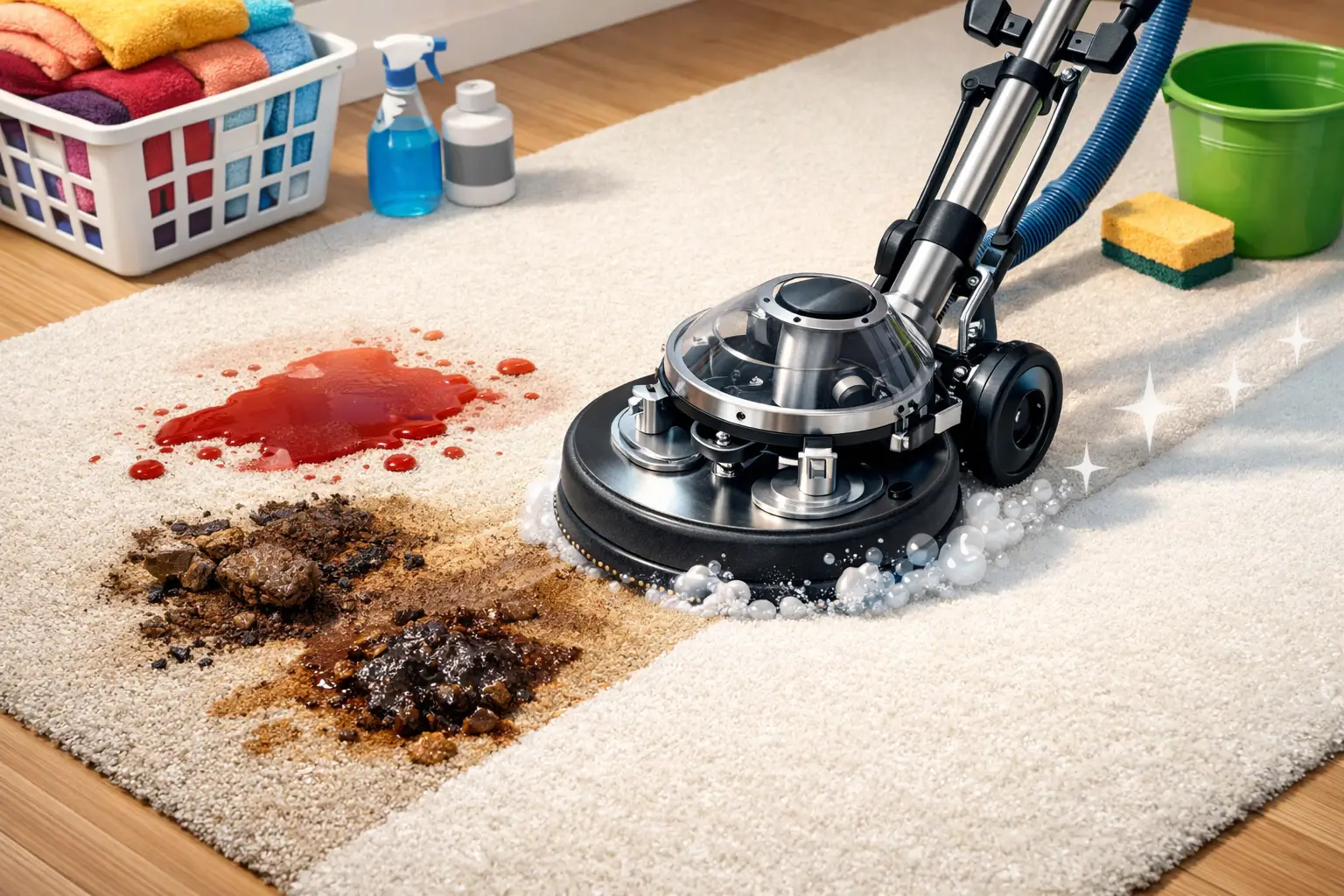
After that, deep extraction becomes the difference-maker. Truck-mounted or high-performance portable equipment can flush out suspended soil, residue, and contaminants that surface cleaning leaves behind. On tough jobs, specialized tools such as Rotovac equipment can help restore carpet more evenly, especially in badly impacted areas.

The final step is just as important as the first. The area has to be evaluated after cleaning, not simply packed up and left. Some stains need a second treatment. Some need controlled drying to prevent wick-back. A hands-on cleaner who takes ownership of the result will catch those details.

Why fiber type changes everything

Not every carpet or fabric can be treated aggressively. Olefin, polyester, nylon, wool, cotton blends, and specialty upholstery fabrics all respond differently. Wool, for example, can be sensitive to high alkalinity and rough handling. Some upholstery dyes can bleed if over-wet. Certain area rugs need far more caution than wall-to-wall carpet.

This is where experience matters more than product labels. Extreme stain removal is not about throwing stronger chemicals at a tougher problem. It is about getting as much result as possible while protecting the material.

Results matter, but so does honesty

One reason people get frustrated with stain removal is that they have heard promises that were never realistic. Some stains are removable. Some are permanent discoloration. Some are a combination of both. Sun fading, bleach damage, dye loss, and long-term chemical changes in the fiber cannot always be cleaned away.

A dependable cleaner should explain that upfront. The standard should be straightforward: use the right process, push for the best possible improvement, and never risk unnecessary damage just to chase a promise.

That practical approach is a big reason owner-operated service matters. When the person assessing the stain is the same person doing the work, there is less sales talk and more accountability. That is how difficult jobs get handled properly.

When it is time to stop trying on your own

If the stain has survived repeated spot cleaning, has odor attached to it, keeps returning after drying, or covers a larger area than a dinner plate, it is usually time for professional help. The same goes for delicate upholstery, area rugs, and any stain caused by pets, water intrusion, or heavy buildup.

For homeowners in Vancouver and surrounding areas, that usually means looking for someone who can do more than run a wand over the surface. You want proper inspection, restoration-level equipment, safe products, and clear answers about what can and cannot be fixed. That is the standard behind The One Carpet & Upholstery Cleaning, and it is the standard tough stains require.

The best time to deal with a severe stain is early, but even old, ugly problem areas can often be improved far more than people expect when the job is handled with the right chemistry, the right equipment, and the kind of care that comes from someone who treats every cleaning like their name is on it.
Carpet Cleaning Maintenance Guide for Homes

Carpet Cleaning Maintenance Guide for Homes

Carpet rarely looks dirty all at once. It happens lane by lane, room by room, under the dining chairs, along the baseboards, and in the spots where pets nap or kids drop snacks. A solid carpet cleaning maintenance guide helps you stay ahead of that buildup before your carpet starts looking worn, holding odors, or showing traffic patterns that are harder to reverse.

If you want carpet to last, maintenance has to be more than occasional vacuuming and hoping for the best. Good care is about timing, using the right methods, and knowing when a problem is still manageable and when it needs professional restoration-level cleaning. That difference matters, especially in busy homes with pets, children, guests, or frequent foot traffic.

What carpet maintenance really does

Regular maintenance is not just about appearance. Dirt, sand, and fine grit work down into carpet fibers and backing over time. Every step across that debris creates friction, which gradually wears the fibers down. That is why a carpet can look flat, gray, or tired even when there are no major stains.

The other issue is residue. Spills that seem cleaned up can leave behind sugars, oils, soap, or moisture. Those residues attract new soil and create recurring spots. Odors can also settle deeper than the surface, especially from pets, food spills, dampness, or tracked-in organic material.

A good maintenance plan protects the carpet you already paid for. It also keeps your home feeling cleaner overall because carpets tend to hold onto what comes in from outside.

A practical carpet cleaning maintenance guide for real homes

The best carpet care routine depends on how you actually live. A quiet spare bedroom does not need the same schedule as a family room with a dog, two kids, and a back door nearby. Most carpets benefit from a mix of weekly upkeep, immediate spot response, and periodic deep cleaning.

Vacuuming is your first line of defense, but frequency matters. In lower-traffic rooms, once a week may be enough. In hallways, stairs, entry areas, and family spaces, two to three times a week is more realistic. Homes with pets often need even more attention because fur, dander, tracked soil, and occasional accidents add up quickly.

Technique matters too. Fast, light passes do less than slower vacuuming with overlapping strokes. High-traffic areas need repeated passes because embedded soil does not come up in one sweep. If your vacuum bag or canister is packed, suction drops and so do results.

Entry prevention also pays off more than most people expect. Door mats inside and outside reduce the amount of grit, moisture, and debris entering the home. A no-shoes rule helps even more. It may sound simple, but less soil coming in means less abrasion grinding into the carpet every day.

Spot cleaning: move fast, but do it right

Most permanent carpet damage starts with a delayed response or the wrong cleaning product. When something spills, blot first. Do not scrub. Scrubbing can distort the fibers, spread the stain, and push it deeper into the backing.

Use a clean white towel so you can see what is lifting. Work from the outside of the spot toward the center. That keeps the stain from spreading. If you use a cleaning solution, use it sparingly. Overwetting the area can create browning, wick-back, or a larger moisture issue underneath the carpet.

This is where homeowners often run into trouble. Store-bought spotters can help in some cases, but some leave residue or react poorly with certain fibers. Others lighten the stain temporarily while leaving the source behind. Pet accidents are a common example. The surface may look better, but odor and contamination can remain in the pad or subfloor.

If a spot keeps returning after it dries, that usually means material is wicking up from below the surface. At that point, more spray and more blotting usually will not solve it.

The stains that need more than basic maintenance

Some carpet problems are not routine cleaning issues. They are restoration issues.

Pet urine is one of the biggest ones. Fresh accidents are easier to address than old, repeated contamination. Once urine dries and crystallizes, it can hold odor and continue drawing moisture from the air. In heavier cases, the carpet, pad, and even subfloor may be affected.

Water stains are another category that people underestimate. A small leak, plant overflow, or tracked-in moisture can leave discoloration, odor, or microbial concerns if not handled properly. Then there are filtration lines, those dark lines that build up along walls or under doors. They are not just random dirt. They often form from air movement carrying fine particles into carpet edges, and they usually need targeted treatment.

Heavily soiled traffic lanes, greasy residues, and old mystery stains also fall into the category where equipment, chemistry, and experience make a big difference. This is especially true if you want visible improvement instead of a quick surface refresh.

How often should carpets be professionally cleaned?

For many homes, professional cleaning every 12 months is a reasonable baseline. But it depends on traffic, lifestyle, and problem areas. Homes with pets, children, allergies, or frequent entertaining often benefit from service every 6 to 9 months. Rental turnovers, move-outs, and post-renovation situations may need cleaning sooner.

Waiting too long can make recovery harder. Soil that sits for extended periods bonds more firmly to the fiber. Stains age. Odors settle deeper. High-traffic lanes start wearing unevenly. Professional cleaning can still make a major difference, but maintenance works best when you are not asking one service to undo years of neglect.

That said, more cleaning is not always better if it is done poorly. Low-moisture shortcuts, overwetting, harsh chemicals, or residue-heavy detergents can create their own problems. Quality matters just as much as timing.

What to look for in professional carpet maintenance

Not all carpet cleaning is equal, and most homeowners figure that out only after a disappointing appointment. If you care about results, ask how the work is actually being done.

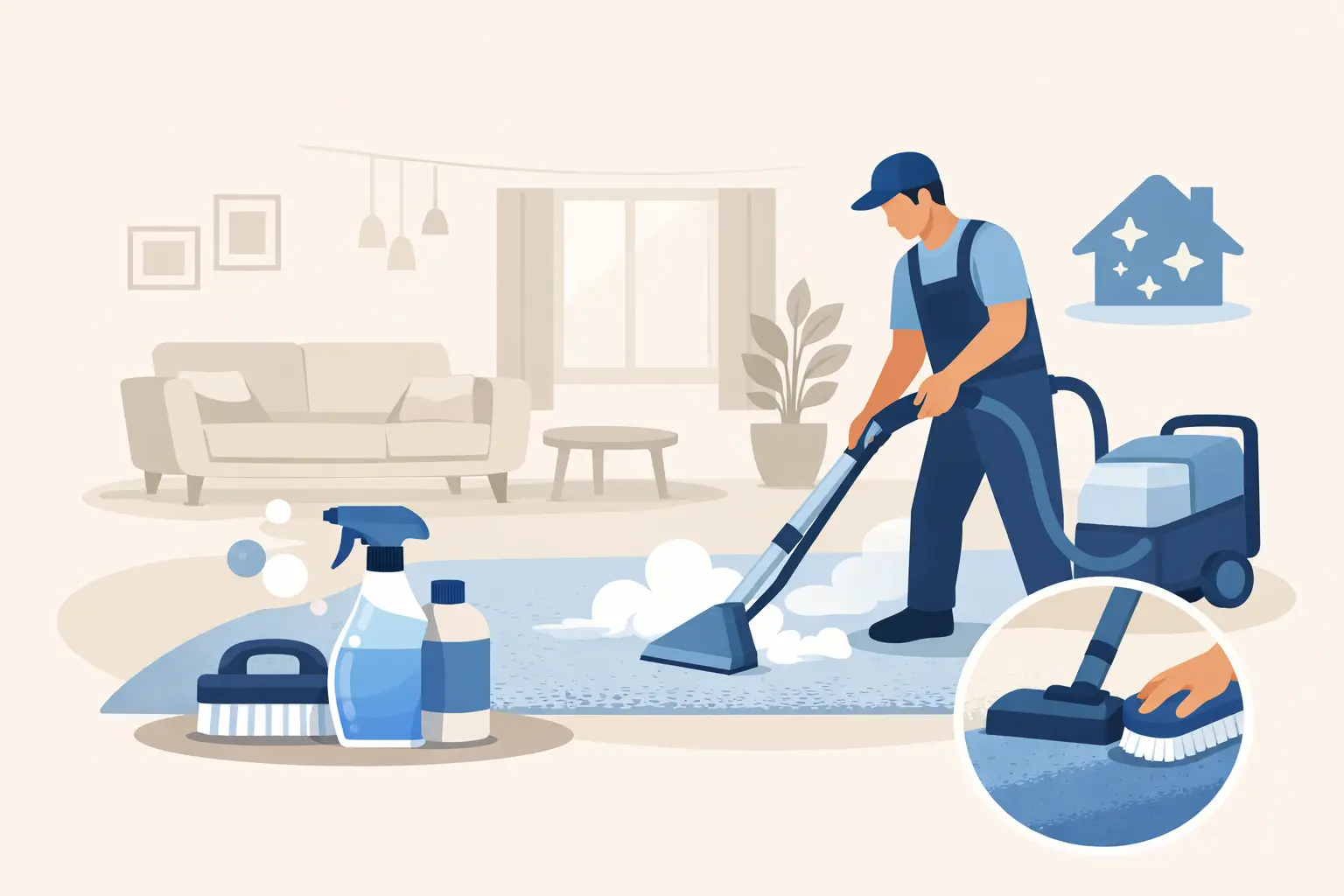
A proper process should include pre-inspection, targeted pre-treatment for problem areas, agitation where needed, and extraction strong enough to remove suspended soil and residues from deep in the carpet. Truck-mounted systems generally provide stronger heat and extraction than basic portable units, though some situations still call for specialized portable equipment. The method should match the carpet condition and access requirements.

This is also where owner-operated service has an advantage. When the person doing the work is the same person standing behind the result, accountability is much clearer. Difficult stains, odor issues, and heavily used carpet often need judgment, not just a standard pass across the room.

For example, equipment like Rotovac can be especially helpful on heavily soiled carpet because it increases agitation and extraction at the same time. Eco-friendly citrus-based products can also be a smart choice when you want effective cleaning without leaving the home smelling harsh or loaded with unnecessary chemical residue.

Simple habits that extend carpet life

A strong carpet cleaning maintenance guide is not built on one annual appointment alone. It works best when a few small habits stay consistent.

Rearranging furniture slightly from time to time can reduce repeated wear in the exact same walking paths. Using area rugs in front of sofas, hall entries, and bed sides can take pressure off the carpet underneath. Changing HVAC filters can also help reduce airborne dust that settles into carpet and contributes to edge buildup.

If you have pets, keep paws as clean and dry as possible, especially during wet weather. If you have children, treat snack zones like risk zones. And if a room starts smelling off even when it looks clean, trust that signal. Carpet can hold more than it shows.

When maintenance becomes restoration

There is a point where routine upkeep stops being enough. If carpet has heavy dark traffic lanes, repeated pet accidents, edge filtration, dingy appearance after vacuuming, or spots that keep resurfacing, that is no longer a basic maintenance issue. It needs a deeper correction.

That does not always mean replacement. In many cases, neglected carpet can be brought back far closer to its original condition than homeowners expect, especially when the right equipment and stain-specific treatment are used. But results depend on the age of the damage, the carpet type, and whether the fibers are truly soiled or physically worn.

That distinction matters. Soil can often be removed. Wear cannot be cleaned away. A dependable cleaner should tell you the difference honestly.

At The One Carpet & Upholstery Cleaning, that hands-on, owner-operated approach is exactly what gives customers more confidence when the job is not straightforward.

The best carpet care plan is not complicated. Stay consistent with vacuuming, handle spills correctly, reduce tracked-in dirt, and do not wait too long for professional cleaning when the carpet starts telling you it needs more. A little attention at the right time saves a lot of frustration later, and it gives your carpet a real chance to look better, smell fresher, and last longer.