That dark path from the hallway to the living room is not your imagination, and it is not always “wear” in the way people think. If you are wondering how to remove carpet traffic lanes, the first step is knowing what you are actually looking at. In many homes, those gray or brown lanes are a mix of compacted fibers, oily residue, tracked-in soil, and fine grit that has settled deep into the carpet pile.
That matters because traffic lanes do not respond well to casual cleaning. A quick rental machine pass may lighten the area for a day or two, but if the soil load is still packed into the base of the carpet, the lane usually comes right back. The good news is that many traffic lanes can be improved significantly, and some can be restored far more than homeowners expect. The catch is that the right method depends on whether you are dealing with soil, fiber damage, or both.
What carpet traffic lanes really are
Traffic lanes form where feet hit the same path over and over. Hallways, stairs, bedroom entrances, and the space in front of sofas are the usual trouble spots. Over time, foot traffic pushes soil deeper into the carpet, flattens the pile, and grinds abrasive particles against the fibers.
That is why traffic lanes often look darker than the surrounding carpet even after vacuuming. Dry soil and oily residue hold onto each other. The more the carpet gets walked on, the more the fibers stay compressed, and the more obvious the lane becomes.
There is also an important difference between soiling and permanent wear. If the fibers are simply dirty and matted, cleaning and agitation can make a big difference. If the tips of the fibers are frayed, discolored, or crushed beyond recovery, cleaning can improve appearance but may not return the carpet to uniform color and texture.
How to remove carpet traffic lanes at home
If the traffic lane is moderate and the carpet is otherwise in fair shape, a careful DIY approach can help. The biggest mistake is over-wetting the area or using too much soap. Both can leave residue behind and make the lane resoil faster.
Start with a slow, thorough vacuuming. This is not a quick once-over. Make multiple passes from different directions to lift as much dry soil as possible before adding any moisture. If you skip this step, you can turn dry grit into muddy residue and push it deeper.
Next, apply a carpet pre-spray or traffic lane cleaner made for your carpet type. Do not soak the carpet. You want even coverage, not saturation. Let the product dwell for several minutes so it can break down oils and embedded soil.
Then agitate the area gently with a soft carpet brush. This step is where many homeowners see the difference between a surface clean and a real attempt at restoration. Agitation helps loosen the compacted soil from the pile. Be firm enough to work the cleaner in, but not so aggressive that you distort the fibers.
After that, extract thoroughly. A home carpet cleaner can help, but it has limits. Use warm water, take slow passes, and do extra dry passes to pull out as much moisture and residue as possible. If the machine leaves the carpet too wet, the backing can hold moisture longer than you think, and that can create its own problems.
Once the area is cleaned, groom the carpet pile with a carpet rake or brush and let it dry completely. If the lane looks better but not fully gone, wait until it is dry before judging the result. Some traffic lanes need more than one treatment, especially if they have not been professionally cleaned in a long time.
Why traffic lanes are hard to remove completely
This is where honest expectations matter. Not every lane can be cleaned back to perfect condition.
A true traffic lane usually has three issues at once. First, there is embedded soil. Second, there is pile distortion from repeated foot pressure. Third, there may be abrasion damage to the fiber itself. Cleaning can remove soil and improve texture, but it cannot reverse all fiber wear.
This is also why some lanes still look shadowed after cleaning. Homeowners sometimes assume the remaining mark means the cleaning failed. In reality, the soil may be gone, but the fiber has already been physically changed. The lane is cleaner, just not visually identical to untouched carpet.
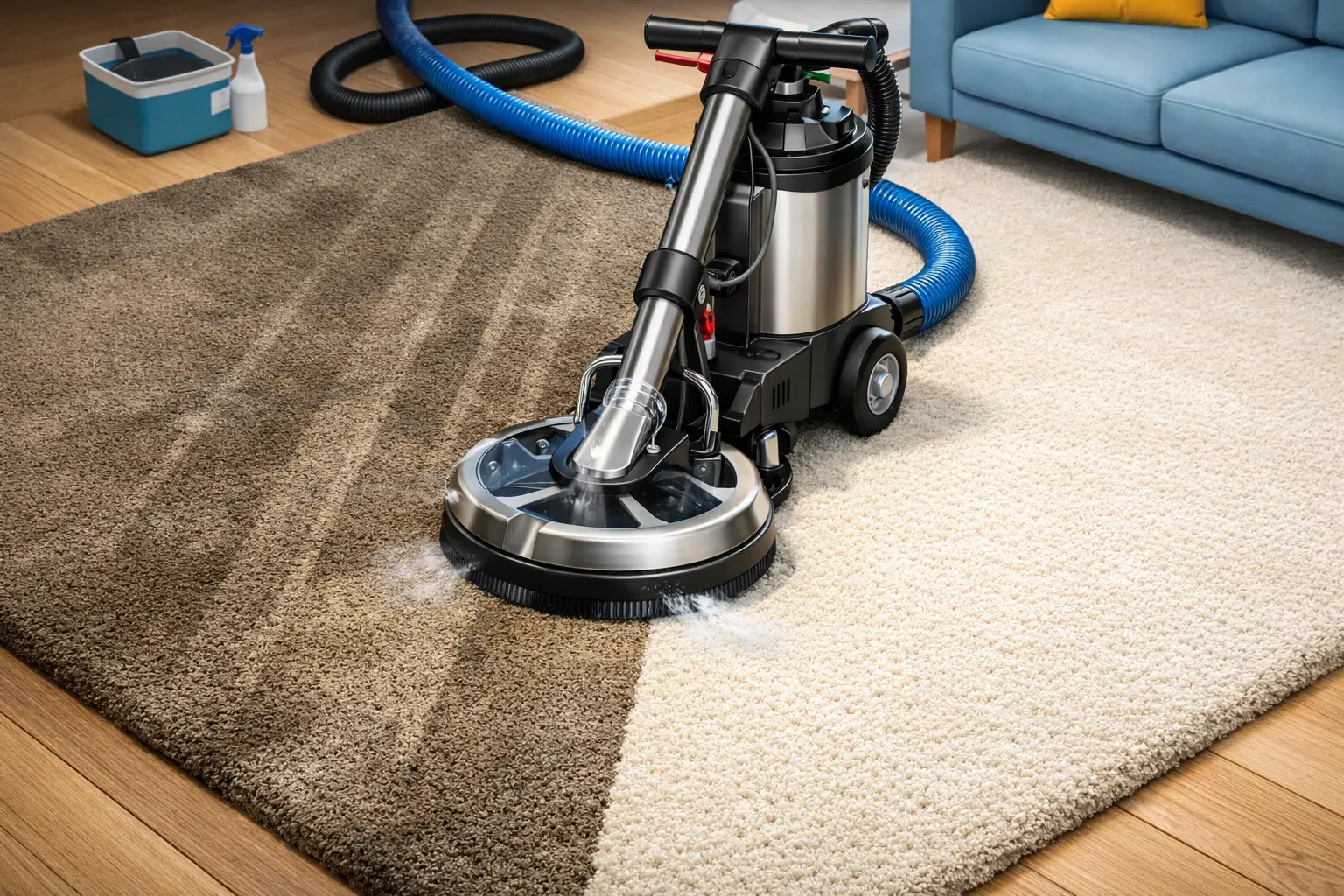
That said, heavily soiled traffic lanes often respond very well to professional restoration cleaning because the difference is not just the cleaning solution. It is the combination of stronger soil suspension, proper agitation, higher water recovery, and equipment that can flush and extract at a much deeper level.
When DIY is not enough
If you have already tried spot cleaners, rental machines, or repeated shampooing and the lane keeps returning, that is a sign the carpet needs a more thorough process. The same is true if the lane feels sticky, crunchy, or stiff. Those are often signs of detergent buildup mixed with soil.
Homes with kids, pets, or high daily foot traffic usually build up oily residue faster than people realize. That residue grabs onto fine dirt and darkens the walk path. In those cases, surface cleaning tends to improve appearance only temporarily.
Professional cleaning is also the smarter move if the carpet is wool, older, heavily matted, or installed in a large high-visibility area where uneven results will be obvious. A strong but controlled process matters more on those jobs than on a small closet or spare room.
How professional carpet traffic lane cleaning works
The best professional results usually come from a restoration-minded process, not a quick spray-and-go service. That means pre-inspection, fiber identification, targeted pre-treatment, mechanical agitation, hot water extraction, and careful grooming.
Traffic lanes often need extra attention before extraction even begins. A proper pre-spray breaks down oil and packed-in soil. Agitation tools help separate fibers and release debris that basic wand cleaning may leave behind. Then high-performance extraction removes suspended soil and rinses away residues more effectively than most consumer machines can.
On severely impacted areas, the technician may need multiple cleaning passes or specialty tools to get the lane as clean as the carpet will allow. That does not mean harsh treatment. In fact, one of the keys is balancing cleaning power with fiber safety.
At The One Carpet & Upholstery Cleaning, this kind of work is approached as restoration, not maintenance. Owner-operated service matters here because difficult traffic lanes are not something you want handed off to whoever is available that day. They need judgment, the right equipment, and realistic communication about what can be restored versus what is permanently worn.
Mistakes that make traffic lanes worse
A lot of carpets get damaged or left dirtier because the cleaning method was wrong for the problem. One common mistake is using too much detergent. Carpet does not need heavy foam to get clean. In fact, over-soaping is one of the fastest ways to create recurring traffic lanes because residue attracts new soil.
Another mistake is scrubbing aggressively with a stiff brush. That can fuzz or distort the fiber tips, especially on softer carpets. The lane may look rougher after cleaning, not better.
Over-wetting is another issue. If too much moisture gets into the carpet and padding, drying slows down and the area may wick soil back to the surface. This can leave a brown or gray shadow that looks like the lane never improved.
Finally, waiting too long is a problem. The longer traffic lanes stay in place, the more chance there is that dirt abrasion has already worn the fiber down. Early intervention gives you the best shot at a strong result.
How to keep traffic lanes from coming back
Once a traffic lane has been cleaned, maintenance matters. Regular vacuuming is the first line of defense, especially in hallways and entry routes. High-traffic areas need more attention than the rest of the room because soil does not spread evenly.
It also helps to treat spots quickly, use walk-off mats at entrances, and rotate furniture when possible so the same path is not getting all the use. If shoes stay on in the house, traffic lanes will build faster. That is just reality.
Professional cleaning on a sensible schedule also makes a real difference. Not because it is a luxury, but because high-traffic carpet needs periodic deep flushing before the soil load turns into visible lane damage. For busy households, waiting until the carpet looks bad usually means you are already behind.
If your carpet has dark walk paths that still stand out after vacuuming, do not assume replacement is the only option. Some traffic lanes are permanent wear, but many are a cleaning issue first. The key is using the right process before the carpet gives up more than it has to.