A rug can look finished long before it actually is. We see it all the time in New Westminster – area rugs with pet accidents, dark traffic lanes, food spills, edge soil, and old water marks that make owners assume replacement is the only option. In many cases, New Westminster rug restoration is not only possible, it is the smarter move if the rug has quality, sentimental value, or simply deserves more than a quick surface clean.
The difference is knowing whether a rug needs basic cleaning or actual restoration work. Those are not the same service. A light maintenance clean may freshen a rug that is only dusty. Restoration is what you need when the rug has embedded soil, odor issues, staining, fiber distortion, or contamination that keeps coming back after DIY efforts.
What New Westminster rug restoration really means
Restoration is about correcting problems, not just making the surface look better for a week. A rug that has taken on pet urine, for example, often has contamination that reaches beyond the visible stain. The face fibers may be discolored, the backing may be affected, and odor can remain trapped deep in the rug. If the treatment only addresses the top layer, the smell returns and the spot resurfaces.
The same goes for water staining, tracked-in grime, and filtration-style darkening around edges or furniture lines. Real restoration work starts with identifying what the rug is made of, how stable the dyes are, how deep the contamination goes, and what level of agitation and extraction the fibers can safely handle. That is where experience matters. A rug can improve dramatically with the right method, but the wrong process can set stains, distort fibers, or leave it over-wet.
When a rug is worth restoring
Not every rug needs intensive work, and not every damaged rug can be brought back to near-original condition. That is the honest part. The right question is whether the rug has enough life and value left to justify restoration.
A good candidate usually has one or more of these issues: heavy soil that has dulled the color, pet odor or recurring urine spots, food or drink staining, water marks, general dinginess, or a rough matted feel in high-traffic areas. Many synthetic and wool area rugs respond very well when they are properly pre-treated, agitated, rinsed, and extracted with the right equipment.
What restoration cannot always fix is permanent dye loss, severe sun fading, fiber rot, or damage from harsh store-bought chemicals. If bleach was used, for example, that is often a color repair issue, not a cleaning issue. If a rug has stayed wet too long and the backing has broken down, the result depends on how far that deterioration has gone.
The biggest rug problems we see in homes
Pet issues are at the top of the list. Homeowners often blot the visible accident, use a spray from the shelf, and think it is handled. Then warm weather hits, humidity rises, or the dog returns to the same spot. That is because urine contamination is rarely just on the surface. It can wick back and keep triggering odor.
Traffic soil is another major problem. This is the slow buildup that happens from shoes, dust, oils, and regular use. Over time, the rug loses brightness and starts looking gray or flat, especially in walkways and in front of sofas. People often think the color is gone when it is really buried under compacted soil.
Then there are spill stains and water marks. Coffee, wine, food grease, and plant water all behave differently. Some need specialty spotting. Some need controlled rinsing. Some leave behind residue that attracts more dirt if it is not fully removed. A simple spray-and-scrub approach can make the spot larger or push it deeper.
The process behind professional rug restoration
A proper restoration job starts with inspection. Fiber type, color stability, stain category, and overall construction all affect the cleaning plan. Wool needs a different touch than synthetic fibers. A flatwoven rug behaves differently than a dense pile rug. There is no one-size-fits-all method if the goal is real improvement.
Next comes dry soil removal. This step matters more than most people realize because a surprising amount of damaging grit is dry particulate matter. If that stays in the rug during wet cleaning, it turns into mud and makes extraction harder.
From there, the rug is pre-treated with the appropriate cleaning solutions. For a company built around hands-on service and restoration-level results, that means choosing products based on the actual problem, not using the same chemical on every job. Citrus-based eco-friendly solutions can be very effective, but they still need to be paired with the right dwell time, agitation, and rinse.
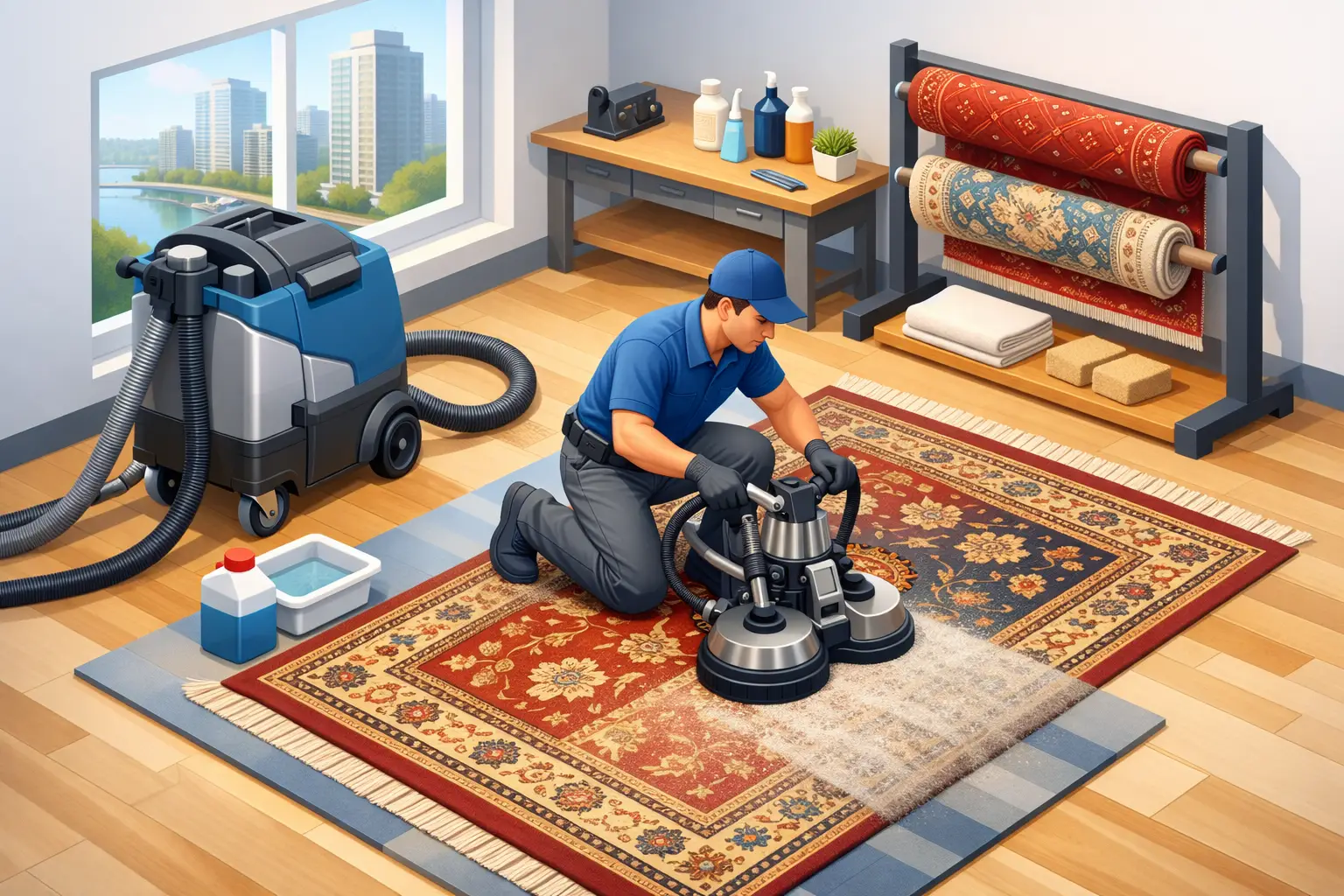
Agitation helps break up compacted soil and release residues from the fibers. Then extraction does the heavy lifting. Strong truck-mounted or portable equipment can pull out suspended soil, contaminants, and moisture far better than consumer machines. That is especially important for odor work, pet contamination, and rugs that have been heavily neglected.
If there are specialty stains, those are treated as needed. Some respond quickly. Others take repeated effort, and the honest answer is that results can vary. A professional should tell you when a stain is likely removable, when improvement is realistic, and when the rug may keep a shadow due to dye change or wear.
Why DIY rug cleaning often falls short
The problem with most DIY rug cleaning is not effort. It is limitations. Store machines do not have the extraction power needed for deep flushing, and many retail spotters leave residue behind. That residue feels like progress at first, but it can attract new soil and leave the rug looking dirty again faster.
There is also a moisture risk. Over-wetting a rug without enough extraction can create browning, odor, or backing issues. Scrubbing too aggressively can fuzz fibers, spread stains, or distort the pile. This is especially common with rugs that already have wear in the traffic areas.
For families with pets or kids, the temptation is to keep treating the same trouble spots over and over. At a certain point, that usually means the rug needs a full corrective process instead of another round of spray cleaner.
What to look for in a New Westminster rug restoration service
If you are hiring someone for rug restoration, look past the basic promise of clean. Ask who is actually doing the work. Ask what equipment is used. Ask whether they have experience with pet stains, water issues, and delicate fibers. Those details matter because restoration work is technical, and results depend on judgment as much as machinery.
Owner-operated service has a real advantage here. When the person inspecting the rug is also the person cleaning it, there is more accountability and usually more care in the process. That is one reason many homeowners prefer working with a company like The One Carpet & Upholstery Cleaning, where the service is handled directly and the standard is tied to one reputation, not a rotating crew.
It also helps to work with someone who stands behind the outcome. A satisfaction guarantee means more when the work involves difficult conditions and realistic expectations are discussed upfront. Good restoration service is confident, but it is also honest.
How quickly you should act on rug damage
The best time to deal with a rug problem is early. Pet accidents become harder to fully correct as they dry and set. Spills can oxidize. Water staining can spread. Soil compaction can wear down fibers if the rug is left untreated for too long.
That does not mean older issues are hopeless. We have seen rugs improve dramatically after months of buildup and repeat spotting attempts. It just means timing affects both the range of treatment options and the final result.
If your rug smells off, looks dull no matter how much you vacuum, or has spots that keep coming back, that is your sign it needs more than maintenance cleaning. A proper restoration approach can often save a rug that still has plenty of life left in it.
A good rug does not need to be perfect to be worth restoring. It just needs the right hands, the right process, and an honest assessment of what can be brought back. If your rug is part of how your home feels, treating it like a disposable item is usually the expensive mistake.