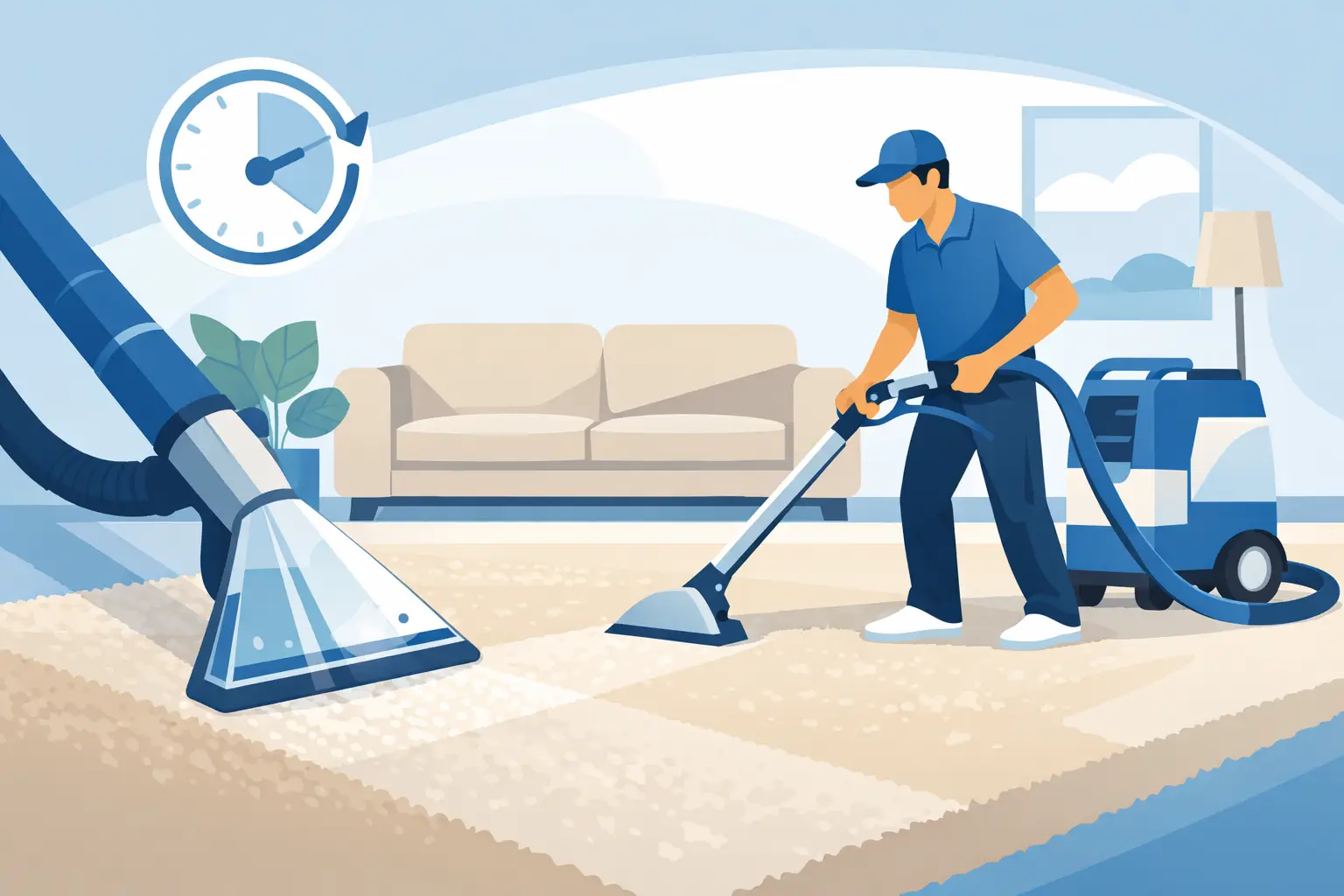
If your carpet looks “fine” but the traffic lanes are getting darker, the house smells a little stale, or pet spots keep coming back, you’re probably already past the ideal cleaning window. A lot of homeowners ask how often should carpets be professionally cleaned, and the honest answer is this: not every home needs the same schedule, but almost every carpet needs it more regularly than people think.
Professional carpet cleaning is not just about appearance. Carpet holds dry soil, oils, allergens, pet dander, and residue deep in the pile. By the time that buildup becomes obvious, it has usually been there for months. The right cleaning schedule protects the carpet, improves how the home feels, and helps you avoid the kind of permanent wear that no machine can fully reverse.
How often should carpets be professionally cleaned in most homes?
For the average household, a professional cleaning every 12 months is a solid baseline. That timing works well for homes with normal foot traffic, no major stain issues, and consistent vacuuming.
But a yearly cleaning is not the right answer for every situation. If you have kids, pets, frequent guests, shoes on in the house, or high-use rooms like stairs and family areas, every 6 to 9 months is usually a better fit. In homes with multiple pets, recurring accidents, or allergy concerns, every 3 to 6 months may be the smarter schedule.
That range is wide for a reason. Carpet wear is driven by traffic, soil load, and what is happening below the surface. A beige carpet in a quiet guest room can go much longer than the carpet on a main stairway with a dog, two kids, and rainy weather coming through the front door.
What changes the cleaning schedule?
The biggest factor is traffic. Carpet fibers break down faster when soil gets ground into them. That gritty material acts like sandpaper, especially in hallways, entrances, living rooms, and stairs. If those areas are flattening, darkening, or feeling rough underfoot, the carpet is telling you it needs attention.
Pets move the timeline up. Even when accidents are not obvious, pet oils, dander, tracked-in debris, and occasional spotting build up quickly. Cat urine and dog urine are especially important to address properly because they can wick back, create odor, and affect the backing and pad if left untreated too long.
Children do the same in a different way. Juice, snacks, craft messes, tracked-in dirt, and lots of floor time all add up. Families often think they should wait until the carpet looks bad enough to justify a cleaning, but waiting usually means stains set deeper and traffic lanes become harder to restore.
Indoor air quality matters too. Carpet acts like a filter by trapping dust, pollen, and particles. That can be helpful for a while, but eventually the filter gets loaded. In homes where someone has allergies, asthma, or sensitivity to dust and odors, more frequent professional cleaning makes a real difference.
Your carpet type matters more than most people realize
Some carpets hide soil better than others. Darker colors, patterned carpets, and certain synthetic fibers can look acceptable long after they are carrying a heavy soil load. On the other hand, lighter carpets show every mark early.
That is why appearance alone is not the best guide. A carpet can look decent and still need a deep flush to remove embedded soil and residue. It can also look worn when the main issue is matting and abrasion from months of traffic without proper extraction.
Signs you should not wait any longer
If you are trying to decide whether to book now or push it off another few months, a few warning signs usually make the decision easy.
Recurring spots are one of the biggest clues. If a stain seems to disappear and then come back, there may be residue or contamination deeper in the carpet. The same goes for odor that returns after surface cleaning.
Dark traffic lanes, filtration lines along baseboards, sticky areas from store-bought cleaners, and a general dull or rough feel are all signs the carpet needs more than vacuuming. After water intrusion or heavy pet contamination, waiting is usually the wrong move because the problem can spread below the visible surface.
How often should carpets be professionally cleaned after pet accidents?
If pet accidents are occasional and treated quickly, a full professional cleaning every 6 months is often enough for the average pet household. But if accidents are frequent, if odor lingers, or if urine has reached the pad, targeted treatment should happen as soon as possible rather than waiting for the next routine appointment.
This is where the quality of cleaning matters as much as the timing. Surface-level treatment may improve the smell for a short time, but proper extraction, rinsing, and sanitizing are what give you a real shot at solving the issue.
Why waiting too long costs more
Many people delay professional cleaning because they want to get “one more season” out of the carpet first. In practice, that often backfires.
When soil sits in carpet for too long, it gets compacted into the fibers and backing. Oils attract more dirt. Stains oxidize, set, or spread. High-traffic areas begin to wear unevenly. At that point, even advanced truck-mounted cleaning and agitation tools can improve the carpet dramatically, but some damage may already be permanent.
Regular maintenance is almost always cheaper than restoration work. It is also easier on the carpet. Cleaning on time helps preserve texture, color, and overall life span instead of forcing the carpet to recover from years of neglect.
Different homes, different schedules
A condo with one adult and no pets usually does fine on a 12-month cycle, sometimes a little longer in low-use rooms. A busy family home is different. In most of those homes, the main carpeted areas should be cleaned every 6 to 9 months to stay ahead of wear and buildup.
Rental situations and move-in or move-out cleanings are their own category. If the previous occupant had pets, smokers, spills, or heavy traffic, the carpet should be professionally cleaned right away. Even if it looks passable, you do not know what is sitting in the fibers or underneath the surface.
Light commercial spaces also need tighter timing. Offices, waiting areas, and service businesses often benefit from cleaning every 3 to 6 months because appearance matters and foot traffic is more concentrated.
The method matters, not just the calendar
A carpet that is cleaned poorly every few months can still end up looking bad. Residue, overwetting, and weak extraction can leave the carpet sticky, attract rapid resoiling, or create drying issues.
That is why professional cleaning should mean more than running a basic machine over the surface. Proper hot water extraction, strong vacuum recovery, the right pre-treatment, and the right agitation method all matter. For heavily soiled areas, pet contamination, filtration lines, or neglected carpet, restoration-level cleaning techniques make a noticeable difference.
An owner-operated company has an advantage here because the person quoting the work is also responsible for the result. That kind of accountability matters when you are trusting someone with expensive flooring, stubborn stains, or odor issues that need more than a standard pass.
A simple rule to follow
If you want the easiest answer, use this guideline: every 12 months for low-traffic homes, every 6 to 9 months for busy homes, and every 3 to 6 months for homes with pets, kids, allergy concerns, or ongoing stain and odor issues.
If your carpet already looks tired, smells off, or has spots that keep returning, do not wait for the “perfect” time. The best time is before the soil and staining become permanent.
At The One Carpet & Upholstery Cleaning, that is exactly how we look at it. The goal is not to sell cleaning more often than you need. The goal is to clean at the right time, with the right equipment and hands-on care, so your carpet lasts longer and your home feels noticeably better.
A good carpet cleaning schedule should save your carpet, not just freshen it up for a week. If you are unsure where your home falls, look at the traffic, the pets, the odors, and the history of the carpet. The answer is usually right there under your feet.