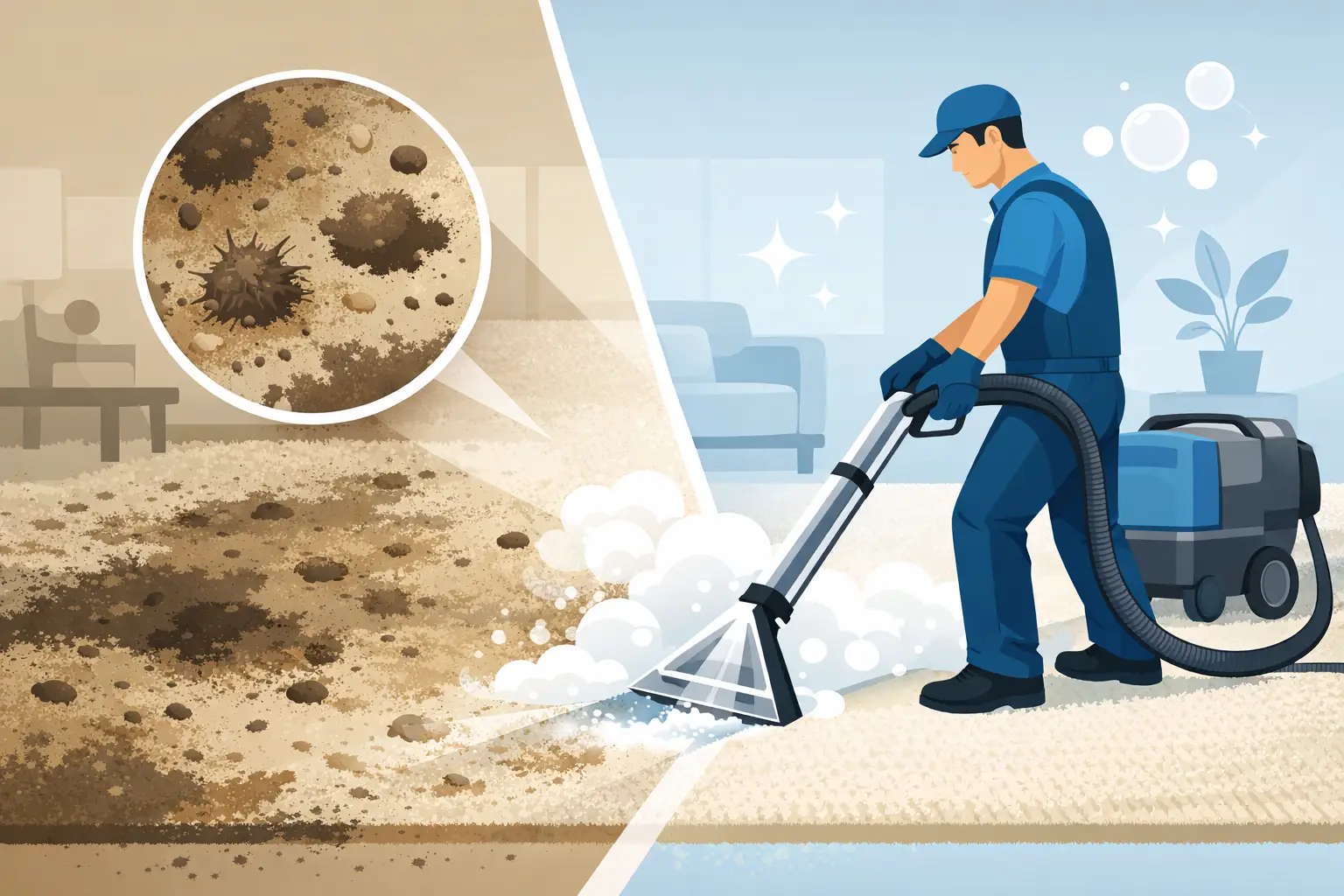
When carpet traffic lanes turn black, pet stains keep coming back, and the whole room starts to smell stale no matter how much you vacuum, basic cleaning is no longer enough. Heavily soiled carpet cleaning takes a different level of equipment, chemistry, and judgment if you want real improvement instead of a temporary surface change.
That matters because not every dirty carpet is the same. Some are loaded with dry soil deep in the pile. Others have oily buildup from foot traffic, food spills, pet accidents, filtration lines along the edges, or old spotting attempts that left residue behind. If the cleaner treats all of that with one quick pass and a low-powered machine, the results usually disappoint.
What heavily soiled carpet cleaning really involves
A neglected carpet does not fail all at once. Soil builds in layers. Fine dry particles settle into the backing. Oils from shoes and skin bind that soil together. Spills wick down and spread. Add pets, kids, move-in dirt, or months of delayed maintenance, and the carpet starts looking gray, matted, and uneven even after routine vacuuming.
Heavily soiled carpet cleaning has to break that cycle in the right order. First, dry soil needs to be loosened and removed as much as possible. Then the oily and sticky residues need to be suspended with the right pre-treatment. After that, the carpet has to be thoroughly rinsed and extracted so the contamination actually leaves the fibers instead of getting pushed around.
This is where professional equipment makes a visible difference. Truck-mounted extraction, quality portable equipment for difficult access areas, and agitation tools such as Rotovac are designed to flush and recover more soil than the average rental machine or bargain service setup. When a carpet has serious traffic lane damage or embedded grime, that extra recovery matters.
Why some carpets bounce back and others don’t
Customers often ask the most honest question first – can this carpet be saved? The answer depends on whether you are looking at removable soil, permanent wear, or fiber damage.
Soil can usually be improved, often dramatically, when the right process is used. Dark traffic lanes, dingy overall appearance, pet-related contamination, and many food or beverage stains often respond well to restoration-level cleaning. But if the carpet fibers are worn down, chemically damaged, bleached, or permanently discolored, cleaning can only reveal the true condition. It cannot rebuild missing fiber or reverse color loss.
That distinction is important because a good cleaner should never promise miracles where the carpet is physically worn out. Matting from crushed pile, filtration lines that have aged for years, and old stains that have set into damaged fibers can improve without disappearing completely. Real expertise is knowing the difference and setting expectations honestly before the job begins.
The process that gets better results
The strongest results usually come from a multi-step approach, not a one-size-fits-all pass. Inspection comes first. Fiber type, level of soiling, stain categories, odor issues, prior cleaning attempts, and areas of concern all need to be identified before chemistry is chosen.
Pre-vacuuming is often overlooked, but it should not be. Dry particulate soil is abrasive, and if it is left in the carpet while moisture is added, it can turn into mud. On a heavily used carpet, removing as much dry debris as possible before wet cleaning helps every step that follows work better.
Next comes preconditioning. This is where the cleaner applies the appropriate solution to break down oils, tracked-in grime, food residues, and other bonded soils. Eco-friendly citrus-based products can be especially effective on greasy buildup while still being a smart choice for homes that want a more family-conscious cleaning approach.
Agitation follows when needed. On heavily soiled carpet, agitation is not an extra. It is often what allows the pre-treatment to reach deeper into the pile and separate embedded soil from the fibers. Rotary extraction or mechanical agitation can make a major difference in restoration work.
Then comes hot water extraction and thorough rinse removal. This is the step that actually removes suspended soil, residues, and moisture. A stronger extraction system helps avoid one of the biggest problems in carpet cleaning – leaving too much detergent and water behind. If residue remains, the carpet can resoil quickly. If moisture remains, drying slows down and odor risks increase.
Spot treatment and post-inspection matter too. Some stains need specialized work after the general cleaning is complete. Pet contamination may need targeted treatment. Water staining may need separate correction. Edge filtration lines often need detailed, slow work that goes beyond standard cleaning.
Common problems in heavily soiled carpets
Traffic lanes are usually the most obvious. Hallways, family room paths, and areas in front of sofas collect fine grit and body oils over time. These spots become dark because the carpet is not just dirty on top – the soil has settled and bonded deep into the pile.
Pet issues are another category entirely. Urine contamination is not just a stain problem. It can involve odor, bacteria, and deposits in the backing or pad. If the source is deep enough, surface cleaning alone will not solve it. The same goes for recurring spots that disappear while damp and return as the carpet dries.
Filtration lines along baseboards and under doors are also common in homes. These dark lines form when air movement pulls dust and oily particles through carpet edges. They can be stubborn and may not fully release if they have been ignored for too long.
Move-out and neglected rental carpets often combine all of the above. Ground-in dirt, drink spills, food spots, pet damage, and low-cost cleaning attempts can leave the carpet looking beyond help. Sometimes those carpets surprise people. Sometimes they reveal wear that was hidden under the soil. A professional should tell you which is which.
Why cheap cleaning often costs more
There is a reason heavily soiled carpets are a poor fit for low-price, high-volume cleaning. Jobs like this take time. They need inspection, specialty treatment, stronger extraction, and careful judgment. If the cleaner is rushing to finish multiple appointments in a day, heavily soiled areas often get under-treated and over-promised.
The usual outcome is fast resoiling, lingering odor, wicking stains, or no meaningful difference in the worst areas. Then the customer pays again to have the job corrected, or replaces carpet sooner than necessary.
A restoration-minded service approaches the carpet differently. The goal is not to make everything look slightly better for 24 hours. The goal is to remove as much soil and contamination as the carpet condition allows, while being honest about what is wear and what is cleanable. That is where owner-operated accountability makes a real difference. The person quoting the job should understand the work and stand behind the result.
What you should expect from a professional
You should expect a clear assessment, not vague promises. A qualified cleaner should explain what kind of soiling is present, what methods will be used, and where the likely limitations are. If there are pet stains, filtration lines, water marks, or permanent wear, you should hear that up front.
You should also expect the right tools for the problem. Heavily soiled carpet cleaning is not the place for weak extraction and minimal prep. Advanced truck-mounted and portable equipment, proper agitation, and targeted stain removal methods are part of getting visible results.
Credentials matter as well. IICRC training shows that a cleaner understands fiber identification, chemistry, stain categories, and safe procedures. That does not guarantee quality by itself, but it is a sign that the work is being approached professionally.
Most of all, you should expect accountability. At The One Carpet & Upholstery Cleaning, that means the owner is the one doing the work, not a rotating crew. For customers who care about consistency, that is not a small detail. It is often the difference between a rushed appointment and a job done with real care.
How to help your carpet stay cleaner longer
After a major cleaning, a few habits make a big difference. Vacuuming slowly and regularly removes abrasive dry soil before it gets ground in again. Taking care of spills quickly prevents them from setting and spreading into the backing. Entry mats help reduce tracked-in grit, especially in rainy weather.
For homes with pets, kids, or high traffic, routine professional cleaning before the carpet becomes heavily loaded is the better value. Restoration work can do a lot, but maintenance is always easier and less expensive than trying to recover years of neglect in one visit.
If your carpet looks far past the point of normal cleaning, that does not automatically mean replacement is the only answer. Sometimes the right process brings back far more than you expected. The best next step is a cleaner who knows the difference between dirt, damage, and what can still be restored – and is willing to prove it with the work.