That sour smell that seems to come back every afternoon is usually not your imagination. When pet accidents soak past the carpet fibers and into the backing or pad, a surface cleaner will only touch the top layer. That is when a pet urine specialist becomes the right call, especially if the odor keeps returning after you have already tried sprays, rental machines, or spot treatments.
Pet urine is one of the most stubborn problems in carpet and upholstery cleaning because it is not just a stain. It is a contamination issue. The visible mark is only part of it. What really causes frustration is what you cannot see – the urine salts left behind, the bacteria that feed on organic material, and the moisture that can reactivate odor over time.
What a pet urine specialist actually does
A true pet urine specialist is not simply someone who sprays deodorizer over a problem area and hopes for the best. The job requires finding the full extent of contamination, treating the source, and cleaning in a way that removes as much urine residue as possible instead of masking it.
That process starts with inspection. In many homes, the obvious spot is only one part of the issue. Pets tend to return to the same areas, and old accidents can spread farther than most people realize. Carpet backing, underlay, and even subfloors can hold odor long after the carpet surface looks clean.
From there, the right treatment depends on severity. A fresh accident on a synthetic carpet is very different from repeated marking in the same corner over six months. Sometimes the carpet can be restored with deep flushing and extraction. Sometimes the pad is too far gone and partial replacement makes more sense. A good specialist will tell you the difference instead of overselling a miracle fix.
Why pet urine odor keeps coming back
This is where DIY products often disappoint people. Many over-the-counter cleaners are built to improve appearance fast. They can lighten a stain or leave a fresh scent, but that does not mean they removed the source.
Urine contains salts and organic compounds that bind to fibers and sink below them. As humidity rises or the room warms up, those residues can release odor again. That is why a carpet may smell fine in the morning, then start giving off that unmistakable pet odor later in the day.
There is also the issue of over-wetting. Rental machines and home spot tools can push contamination deeper if they are used without enough extraction power. You may feel like you cleaned the area thoroughly, but if moisture remains trapped in the carpet or pad, the smell can actually get worse.
Signs you need a pet urine specialist, not a basic cleaning
If the accident happened once, was caught quickly, and has not left a lasting smell, a standard cleaning may be enough. But some situations clearly call for specialized treatment.
If odor returns after cleaning, if your pet keeps going back to the same place, if stains have turned yellow or dark over time, or if the affected area feels stiff or crunchy, there is usually deeper contamination present. The same goes for move-out or move-in situations where the home smells clean at first but pet odor appears once the place warms up and air starts circulating.
This is especially common in bedrooms, hallways, stair landings, and around the edges of rooms where pets feel secure marking. In those cases, a quick pass with basic equipment will not solve the real problem.
How professional treatment is different
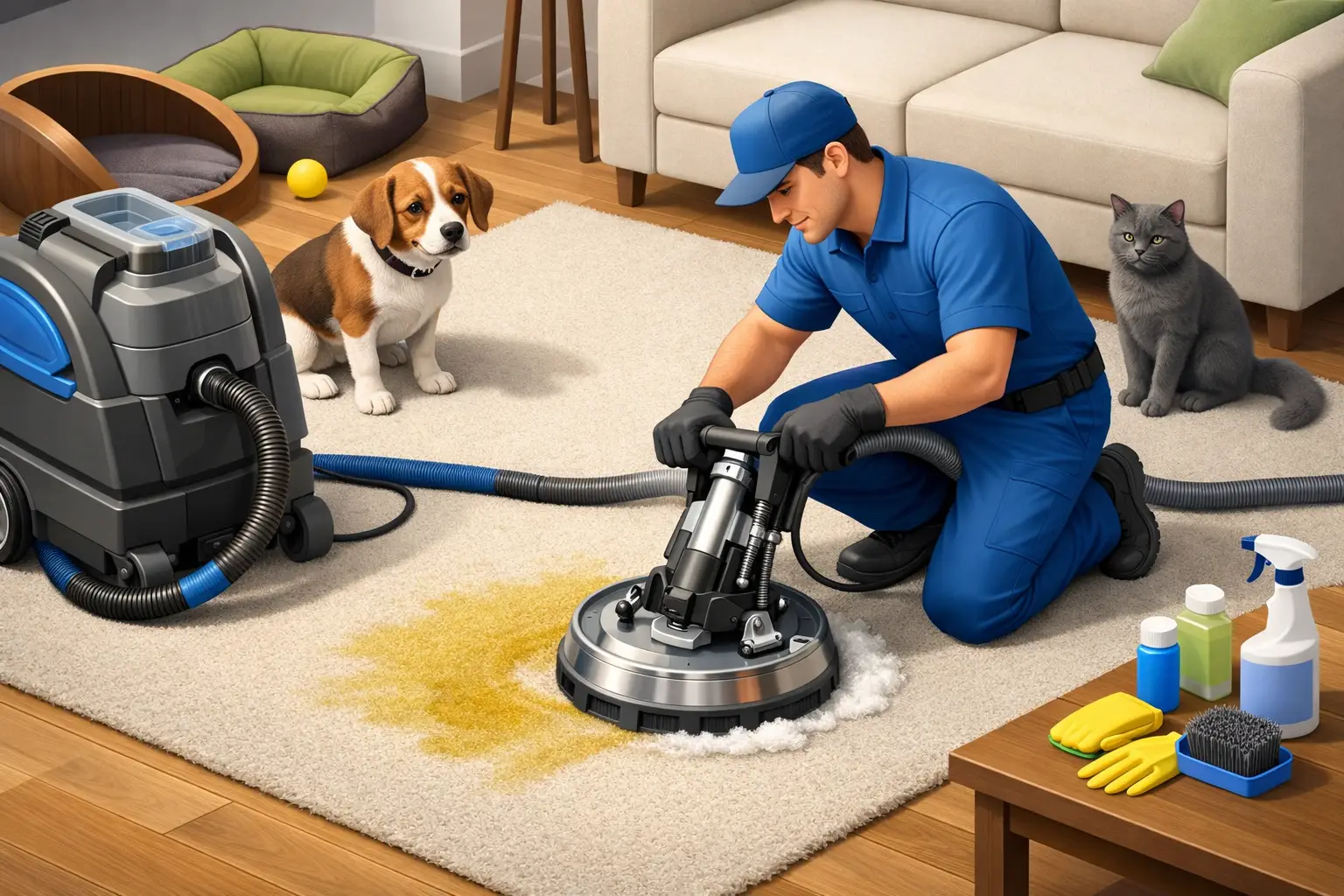
The biggest difference is extraction power and method. Professional truck-mounted and portable systems can flush and recover far more contamination than consumer machines. When paired with the right urine treatment products, that matters.
At The One Carpet & Upholstery Cleaning, the focus is on restoration-level work, not surface-level improvement. That means using the proper equipment to reach deeper into the carpet structure, applying treatments that target urine contamination, and cleaning with enough power to pull out what lesser machines leave behind. On pet-related jobs, that extra step is often the difference between a room that smells better for two days and one that stays genuinely cleaner.
There is also judgment involved. Every technician can say they clean pet stains. Not every cleaner knows when to use a controlled flush, when to avoid damaging delicate fibers, or when to be honest and say the pad or subfloor may still be holding contamination. That kind of hands-on experience saves customers time and wasted money.
What can be restored and what depends
Most people want a yes or no answer. Can the smell be removed? Can the stain come out? Sometimes yes, and sometimes it depends on how long the urine has been there, what material was affected, and whether previous cleaning attempts changed the chemistry of the stain.
Synthetic carpet usually gives the best chance for improvement because it does not absorb urine the same way natural fibers can. Wool rugs and certain upholstery fabrics are more complicated. They can be cleaned and treated, but they also require more caution because aggressive chemistry or over-wetting can cause damage.
Then there is the age of the problem. Fresh contamination is always easier to address than repeated pet accidents that have dried, crystallized, and spread into underlying materials. If the urine has reached the subfloor, full odor removal may require more than carpet cleaning alone. A dependable professional should explain that clearly rather than promise a perfect result on every job.
Why masking odor is a bad strategy
A lot of products sold for pet odor rely on fragrance. They make a room smell cleaner for a while, but fragrance is not removal. In some homes, heavy deodorizers can even create a worse problem by mixing floral or perfume scents with residual urine.
That is not what most homeowners want. They want the source handled properly. They want to walk into the room a week later and not smell anything at all. That takes real cleaning, proper rinsing, and enough extraction to reduce what is left behind.
For families with children, guests, tenants, or sensitive noses, this matters even more. A carpet should not just look better. It should feel and smell clean too.
The value of owner-operated service on pet urine jobs
Pet urine issues are not ideal for rushed appointments or a rotating crew that treats every room the same way. These jobs benefit from experience, patience, and accountability. The inspection matters. The equipment choice matters. The decision about whether a carpet can be restored or needs additional repair matters.
That is why owner-operated service makes a real difference. When the person doing the work is the person standing behind the result, there is more care in the process. Customers notice that, especially when they have already paid once for cleaning that did not fix the problem.
In homes across Vancouver and the Lower Mainland, that trust matters. People want honest answers, clear pricing, and someone who takes the time to explain what is happening under the surface instead of just rushing through a service window.
What to do before the problem gets worse
If your pet has had repeated accidents, the best move is not to keep layering product after product on the same spot. That usually makes residue build-up worse and can set stains more deeply. Blot fresh accidents quickly, avoid over-saturating the area, and get a professional assessment before the contamination spreads further.
The longer urine sits, the harder it becomes to fully correct. Early treatment gives you more options and usually better results. It can also help stop repeat marking, since pets are far less likely to return to a spot when the odor source has been properly reduced.
A pet urine problem does not always mean your carpet is ruined. But it does mean the job needs more than a basic cleaning if you want a real shot at restoring the room. The sooner the source is handled correctly, the better your chances of getting back to a home that smells clean for the right reasons.