That area rug in the living room usually tells the real story of a home. It catches pet traffic, food spills, wet shoes, dust, and the kind of daily wear that a quick vacuum just does not fix. If you have been wondering about the best way to clean area rugs, the honest answer is this – it depends on the rug, the stain, and how deep the soil has worked into the fibers.
A lot of rugs are damaged by well-meaning cleaning. Too much water, the wrong detergent, aggressive scrubbing, or renting a machine that leaves heavy moisture behind can turn a dirty rug into a bigger problem. The goal is not just to make the rug look better for a day. The goal is to clean it thoroughly, protect the fibers, and avoid odor, shrinkage, browning, or dye bleed.
The best way to clean area rugs starts with the rug type
Not every area rug should be cleaned the same way. Synthetic rugs like polypropylene or nylon are usually more forgiving and can handle stronger cleaning methods. Wool rugs need a much lighter touch because they can hold moisture, brown easily, and react badly to high alkalinity. Cotton rugs may shrink. Jute, sisal, and other natural fiber rugs are especially risky because excess moisture can distort the shape and weaken the backing.
That is why the first step is always identification. Before you put down any spray or drag out a rental machine, check the tag if it is still attached. If there is no tag, look at the fiber, backing, and construction. Hand-knotted, tufted, machine-made, and glued-back rugs all respond differently to moisture and agitation.
If a rug is valuable, older, delicate, or made from wool or natural fibers, home cleaning should stay very light. In those cases, the best results usually come from professional cleaning with controlled moisture, proper extraction, and fiber-safe solutions.
What most homeowners get wrong
The biggest mistake is treating an area rug like wall-to-wall carpet. Rugs are often denser, have different backings, and may not release moisture the same way. A carpet shampooer can push dirt deeper, soak the base, and leave residue behind if it is not extracting strongly enough.
The second mistake is overusing soap. If your rug feels stiff after cleaning or seems to attract dirt faster, that leftover residue is often the reason. More product does not mean more cleaning. It usually means more rinsing is required.
The third mistake is waiting too long on stains. Pet accidents, coffee, wine, and food spills become much harder to remove once they set into the fibers and pad. Odor problems also get worse when moisture reaches the foundation and is left there.
The best way to clean area rugs for routine maintenance
For regular upkeep, vacuuming is still the most important step. Dry soil is abrasive. It cuts into fibers every time someone walks across the rug. A rug that looks only mildly dirty can actually be holding a surprising amount of grit.
Vacuum both sides when possible. The face yarn holds visible debris, while the backing can trap fine dust and sand. If the rug has fringe, avoid running a beater bar directly over it. Use suction and upholstery tools instead so you do not pull or fray the ends.
For homes with pets, kids, or heavy traffic, vacuuming two to three times a week makes a real difference. That does more for longevity than occasional heavy scrubbing after the rug already looks worn.
How to handle spills without making them worse
When a spill happens, blot first. Do not scrub. Scrubbing spreads the stain, roughs up the fibers, and can force the spill deeper into the rug.
Use clean white towels or paper towels and press firmly to lift as much liquid as possible. Then apply a small amount of water or a fiber-safe cleaning solution to the towel, not directly to the rug, and continue blotting from the outside of the stain toward the center.
If you are dealing with pet urine, plain surface cleaning is often not enough. The visible spot may improve while the odor remains below. That is where many homeowners get frustrated. They think the stain is gone, then the smell returns on humid days. Urine contamination usually needs deeper flushing and extraction to remove what has soaked through.
For grease or oily spots, be careful. Household degreasers can strip color or leave a sticky residue. Test any product in a hidden area first. If there is dye transfer onto your towel, stop right there.
Can you shampoo an area rug at home?
Sometimes, yes. But only if the rug is a good candidate and only if you can control moisture. Machine-made synthetic rugs with stable dyes are usually the safest option for home shampooing. Even then, lighter cleaning is better than saturating the rug.
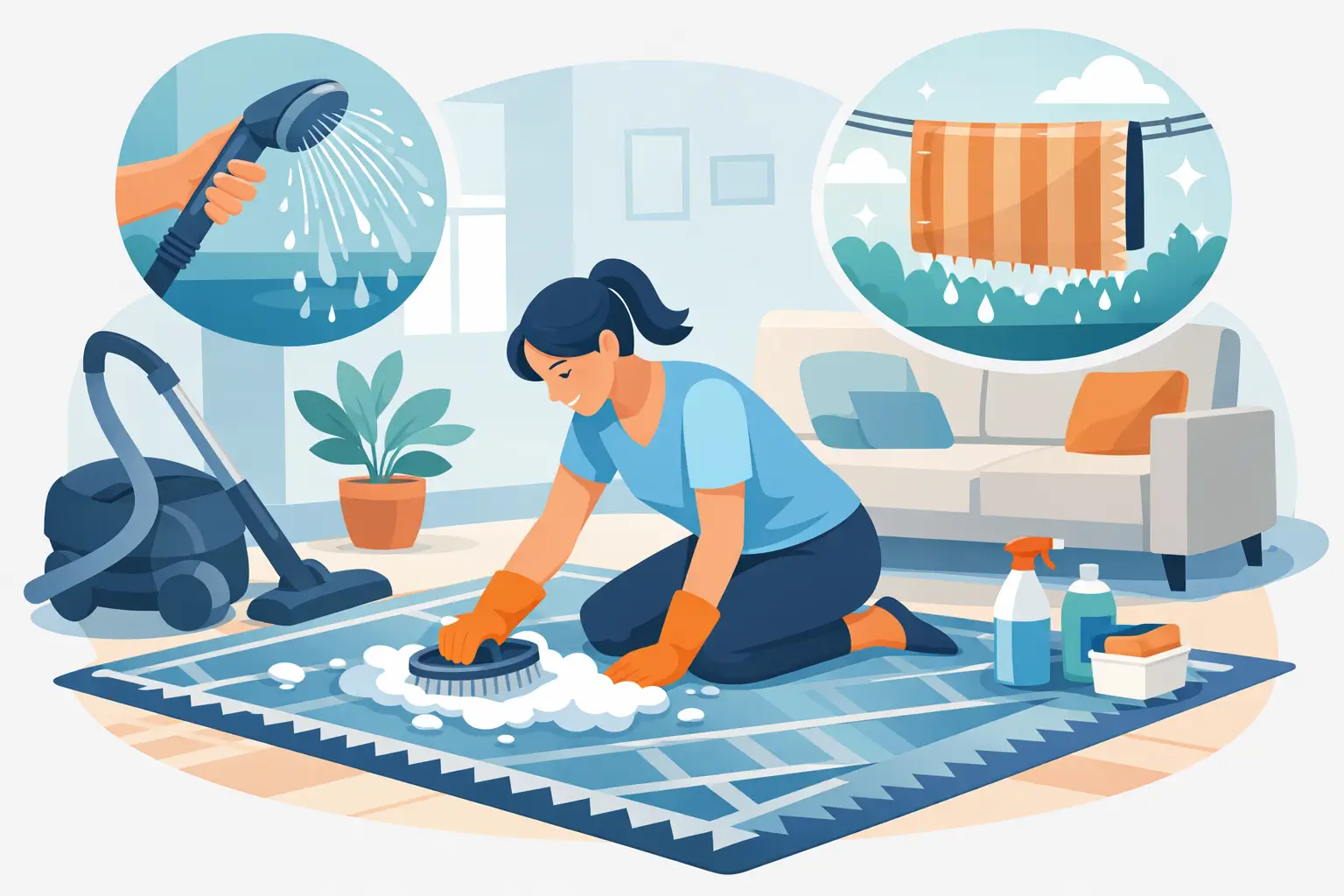
Use a small amount of low-residue cleaner, work in sections, and extract as much moisture as possible. Air movement matters just as much as cleaning. Set up fans, open windows if weather allows, and get the rug drying quickly. A rug that stays damp too long can develop odor, backing issues, or discoloration.
This is where professional equipment has a major advantage. Strong truck-mounted or high-performance portable extraction removes far more soil and moisture than most rental units. That means a deeper clean and faster drying. It is one of the reasons heavily soiled rugs often respond much better to owner-operated professional service than to do-it-yourself cleaning.
When professional rug cleaning is the better call
There is a point where home methods stop being cost-effective. If the rug has pet staining, water staining, heavy soil buildup, dingy traffic lanes, filtration lines, or old spill marks, a deeper restoration process usually gets better results.
Professional cleaning is also the safer choice when the rug is wool, has unstable dyes, smells musty, or has already been over-wet in the past. In those situations, the issue is not just appearance. It is whether the rug can be cleaned without causing shrinkage, browning, or damage to the backing.
At that level, technique matters. Pre-inspection, fiber identification, stain-specific treatment, controlled agitation, proper extraction, and fast dry times are what separate a true cleaning from a surface rinse. That is also why experience matters. Difficult stains are not all the same, and using one catch-all product often creates more work later.
A simple way to decide what your rug needs
If the rug only has loose dry soil and no stains, vacuuming and routine care may be enough for now. If there is a fresh spill, spot cleaning with a careful hand makes sense. If the rug looks dull across the whole surface, smells off, or feels sticky, it likely needs more than a quick fix.
And if you are asking yourself whether to rent a machine or bring in a professional, think about replacement cost. A cheap synthetic rug is one thing. A large area rug that anchors your room, or a piece with sentimental or decorative value, deserves a safer approach.
How often should area rugs be cleaned?
Most area rugs in active homes should be professionally cleaned about every 12 to 18 months. Homes with pets, kids, heavy foot traffic, or allergy concerns may need cleaning more often. Entry rugs and dining room rugs usually show wear faster than bedroom rugs or formal sitting room pieces.
The right schedule is not just about looks. Soil buildup shortens the life of the fibers. Odors become harder to remove over time. Stains that might come out fairly easily in the first few weeks can become permanent if they sit too long.
The method matters more than the product
People often ask for the best product, but the better question is the best process. Good rug cleaning is not about one miracle bottle. It is about matching the method to the fiber, using the right amount of moisture, removing residue completely, and drying the rug properly.
That is where a hands-on cleaner has an edge. An owner-operated service has a direct stake in the result. There is accountability, careful inspection, and a lot more attention paid to the details that protect the rug while still getting real soil and staining out. At The One Carpet & Upholstery Cleaning, that practical, restoration-focused approach is exactly what customers are looking for when a rug needs more than a quick cosmetic clean.
A clean rug should not just smell fresher and look brighter for a couple of days. It should feel properly cleaned, dry safely, and hold up to daily use. If you keep that standard in mind, the best cleaning choice usually becomes pretty clear.